Choosing a Screen Room

Adding a screen porch to your home can be a great way to extend the use of your outdoor space. I have often heard people say that the patio area gets ten times more use after the screen room was added. This type of room addition often adds a higher dollar value to your home then the room cost to complete.

Screen rooms are used as sleeping pouches, as exercise rooms, sitting areas, reading rooms and dinning rooms. Screen rooms can be a safe place for children and pets to be outdoors while being sheltered from the elements. With a little modification screen rooms can serve as winter plant storage rooms. Here I will cover the basic types of screen rooms available, from a stick built (2x4s) covered with screen to manufactured pre-fabed units. Some of the modern materials allow for low pitched roof styles for single story homes. You are only limited by your imagination and budget.

Screen room sizes: If you are pouring a new patio slab or building a new deck any size room you want can be built. If you have an existing patio or deck then make the room fit the existing base or cover part of the patio with the screen room. The screen room does not have to enclose the entire patio area. Typical room sizes are 10' x 16' up to 12' x 20'. The roof has to be sized to provide for a 12” , 18” or 24” roof overhang. The roof overhang greatly reduces wind blown rain entering the room.

Wood stick built screen rooms: The lowest cost way of building a screen room is to use 2x4's at 24” on centers under an existing roof. Cover the screen's walls with fiberglass window screen, add a pre-made wood screen door, and you are done. If you need to build a wood roof for your screen room it may not be cheaper then the manufactured aluminum products. This is because a wood framed roof with shingles requires a 4” in 12” pitch for proper drainage, (a room with a 10' projection would need a wood roof height of 40”). That high roof slope makes for a lot of construction cost. The manufactured aluminum sandwich roof materials can have a slope of as little as 1/4” per foot (that same 10' room projection would have a drop of less then 12”).

Back to those wood walls. You could take 2x4's rip them lengthwise on a table saw, creating one 1” piece and one 1.5” piece, build the wall with the 1.5” pieces, stretch screen over the1.5” studs then nail the 1” pieces back to the 1.5” pieces. That will make a real clean looking screen room wall. Another method is to buy molded plastic screen retainers at the lumber yard for use on 2x4 studs. Do not forget to put horizontal bracing at 48” up from the flour to prevent the studs from warping and twisting. If you plan to construct a wood roof, pick up a roof construction book at your lumber supplier, as they can be a little complicated to construct properly. The wood used to construct the walls should be pressure treated or ceder.

Shed roofs (roofs sloping one direction) constructed from wood, with a slope under 4” per foot of projection, are only appropriate for non snow load areas. A slope of 1.5” per foot can be used if the roof cover material is metal or roll roofing. Consult a roofing book for details. If you plan on using a shed roof and, or, you roof slope is less then 1.5” per foot of projection, consider a manufactured laminated aluminum and foam roof system.

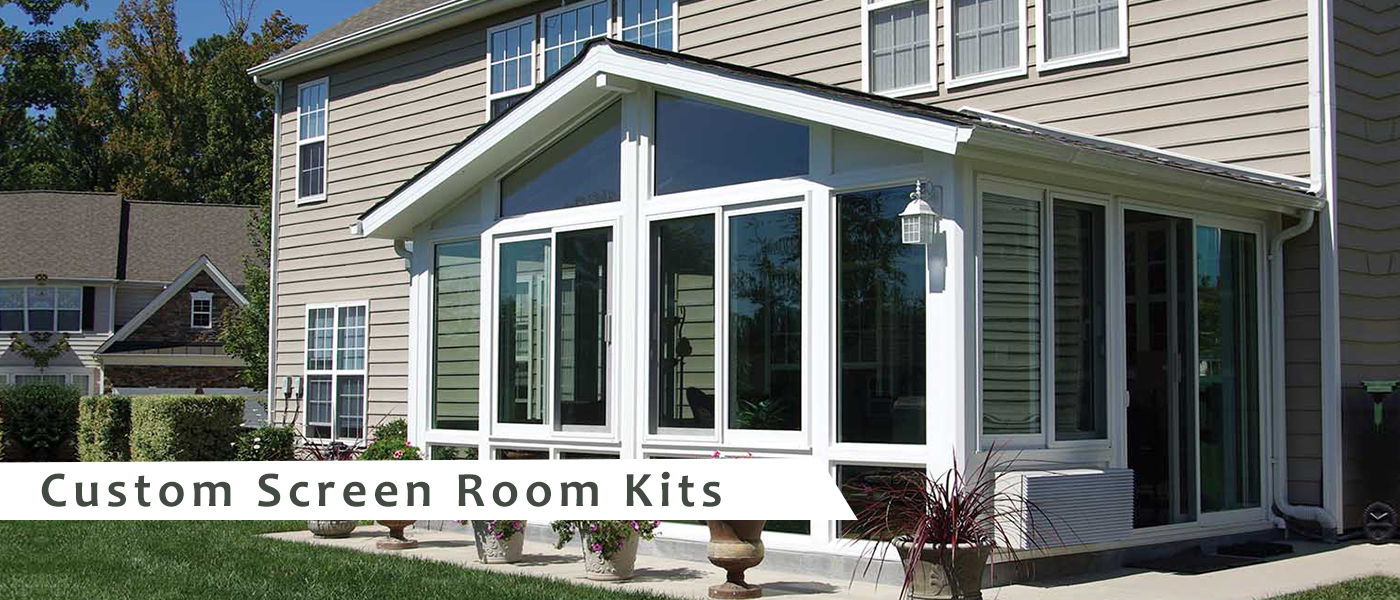
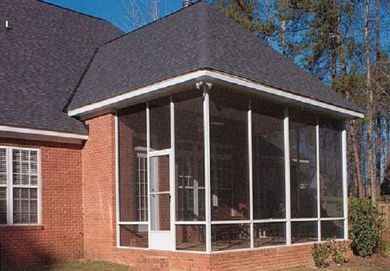
Aluminum screen room construction: Aluminum framed screen rooms make for a clean looking, virtually maintenance free installation. Any competent handyman can assemble this type of room and make a professional looking job of it. The room is made from extruded aluminum components that come in pre-painted colors. White and bronze are the most popular colors, other colors are available. 2” x 2” framing spaced at 48” on center is the most common arrangement. 2” x 3” framing systems re also available. A typical wall would consist of 1” x 2” reviving track at the floor and ceiling, 2” x 2” hollow aluminum tubes (channels) used as upright framing (studs) at 48” O.C. (on centers), the same 2” x 2” s for chair rails, 1” x 2” or 2” x 2” used at the bottom and top of the wall and fiberglass screening rolled into spline groves extruded into the aluminum channels. Doors, kick panels, dogie doors, and various options are available. The advantage to this type of screen wall system is that the component parts can be cut to fit almost any configuration that the job requires. Walls can be any height needed. Your room could have screen from floor to ceiling, partial screen with a 18” or 20” kick panel. Color matched 36” aluminum screen doors are common. You could even screen the roof if you wanted. The walls made from these materials will support the roof or you can build in between any existing post. As the room parts are cut to fit on site, construction of the wall to accommodate uneven slabs, decks and roof overhang areas can be easily done. Material (kit) pricing varies as to your needs but about $50 per lineal foot of wall is close.

Option choices can be vinyl window panels, dog doors, solid kick panels, type of screening, heaver 3” framing, and choice of colors.

Prefab roof panels: Most screen room kits are sold with aluminum insulated roofing systems. This type roof allows for a low 1/4” to 1/2” per foot slope and accomplishes a roof, ceiling and insulation in as little as 3” of thickness. For areas where conserving the available head room clearance is critical, this type of roof is ideal.

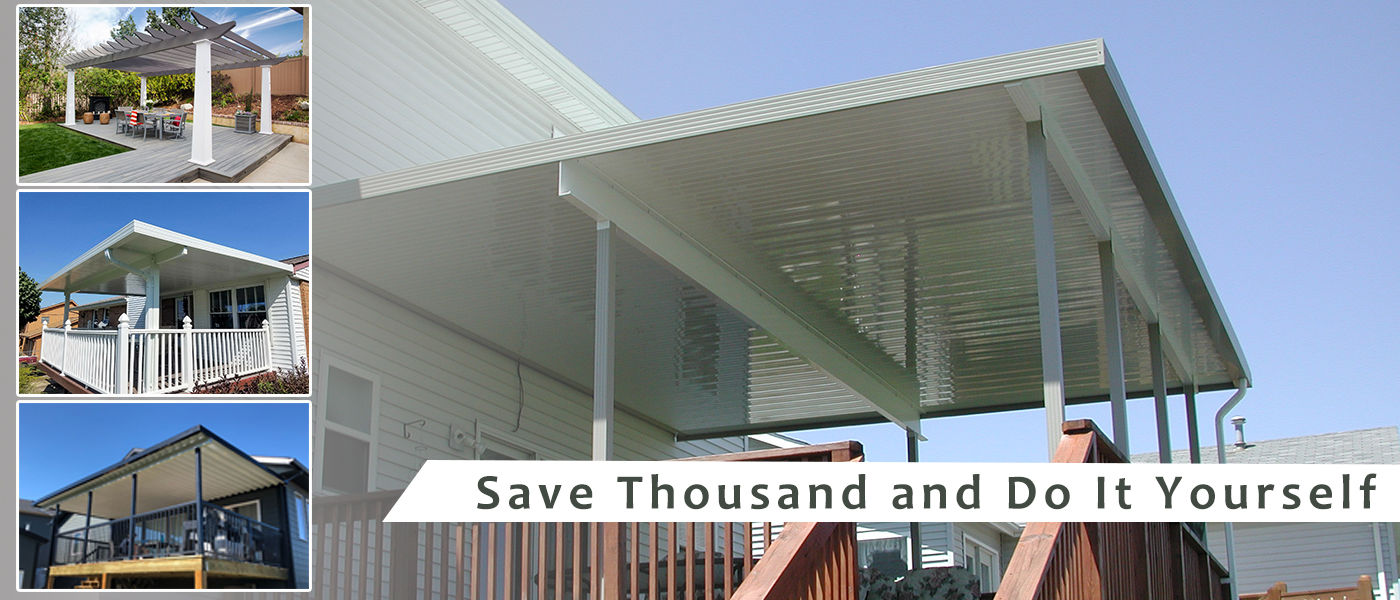
The roof system consist of a attaching a channel (header) to the homes wall, using pre-made 4' wide or 2' wide roof panels (available in any length), adding the front gutter or drip edge and side fascias and you have a professional finished looking roof. Color matched fasteners and hardware complete the jobs look. Molded in ceiling wiring chases are available. The roof systems can be designed for any snow load conditions and they come in 3” (most common), 4”, and 6” thickness. Options included, peak roof styles, shed roof styles, wiring chases molded into a roof panel, panels configured as aluminum-foam-aluminum (the most common), or aluminum-foam-wood (for use with shingles or tile roofing), and color options. Plan on your roof being at a minimum of 1' wider in all direction then the rooms walls. The resulting roof overhang will greatly reduce rain infiltration and make the screen last longer. Cost of this type of roof varies as to size and options but about $12 to $15 per square foot. The roofs are fairly maintenance free and with some precaution they can be walked if need be. The extruded aluminum gutters can take a ladder leaning up against them. The roof systems are fast and easy to install.

Pre-assembled wall svreen rooms: Well partially pre-assembled screen rooms. The next step up from the screen rooms made from aluminum components is the modular screen room. These are made to order from measurements you provide. The wall consist of a screen receiving track and headers and screen walls pre-assembled into wall sections. Typically the pre-made 4' wall sections arrive at your job site boxed and numbed as to its location in the wall. Each section comes complete with screen, and kick panel installed. Set a section in place, snap lock the next section to the first and before you know it the wall is installed. Available in 2” and 3” thick walls and with all the choices of the component walls discussed above. The pre-manufactured sections reduces the on site work by about 60%. The cost is higher and your measurements must be very accurate as rework could be costly. The advantage is in time saved and a very professional look. Roofs can be your existing roof or one of the manufactured panel roof systems mentioned earlier.

Do-It-Yourself: Constructing your own screen room can save from 30% to 50% depending on labor and contractor mark-ups in your area. You can do a competent and professional looking job, increase the value of your home and improve your outdoor living environment. Assembling a screen room is a two to three day job that provide enjoyment for years.